
Fashion isn’t just about clothes. It’s about ideas, identity, culture, and how people choose to present themselves to the world. If you’ve ever looked at an outfit and thought “I could design something better” – you’re already thinking like a fashion designer.
Let’s break this down in a simple, real way so you actually understand what fashion designing is, what you’ll study, and where it can take you.
What Is Fashion Designing?
Fashion designing is the process of creating clothing, accessories, and lifestyle products by combining creativity with technical skills. It starts from an idea and ends with a finished product that people can wear or use.
But here’s the thing most people don’t realize – it’s not just sketching pretty outfits.
It involves:
- Understanding fabrics
- Studying trends
- Creating patterns
- Stitching and construction
- Using design software
- Knowing what people actually want to wear
A fashion designer is both an artist and a problem solver.
The Real Process Behind Fashion Designing
A lot of beginners think designing is just drawing. It’s not. There’s a full step-by-step process behind it:
1. Idea & Inspiration
Designers take inspiration from culture, seasons, history, or even daily life.
2. Research & Trend Study
What’s trending? What will people wear next year?
3. Sketching & Illustration
Turning ideas into visual designs.
4. Fabric Selection
Choosing the right material – this changes everything.
5. Pattern Making
Creating the structure of the garment.
6. Garment Construction
Actual stitching and production.
7. Final Presentation
Showcasing collections through portfolios or fashion shows.
This is exactly why structured education matters because you can’t learn all this randomly from YouTube.
Types of Fashion Designing
Fashion designing is not one single field. It has multiple paths:
- Apparel Designing – Clothes for men, women, kids
- Textile Designing – Fabric creation and patterns
- Fashion Styling – Creating looks and outfits
- Fashion Illustration – Drawing concepts
- Fashion Merchandising – Selling and marketing fashion
- Accessory Designing – Bags, jewelry, footwear
You don’t have to do everything. You choose your lane.
Skills Required to Become a Fashion Designer
You don’t need to be born talented. But you do need to build these skills:
- Creativity and originality
- Observation skills (spotting trends early)
- Basic drawing and visualization
- Fabric knowledge
- Sewing and construction basics
- Communication and presentation
- Digital design skills (CAD tools)
The difference between average and great designers?
Consistency + exposure + practical work.
Why a Degree in Fashion Designing Actually Matters
You can try learning on your own. But honestly, you’ll hit limits.
A proper degree gives you:
- Structured learning (not random tutorials)
- Industry exposure
- Practical training
- Portfolio development
- Networking opportunities
One such structured program is the
B.Sc. in Fashion Design & Technology
You can explore full course details here:
https://www.isftcollege.com/b-sc-fashion-design-technology/
This kind of program focuses on both creativity and technical understanding – which is exactly what the industry expects today.
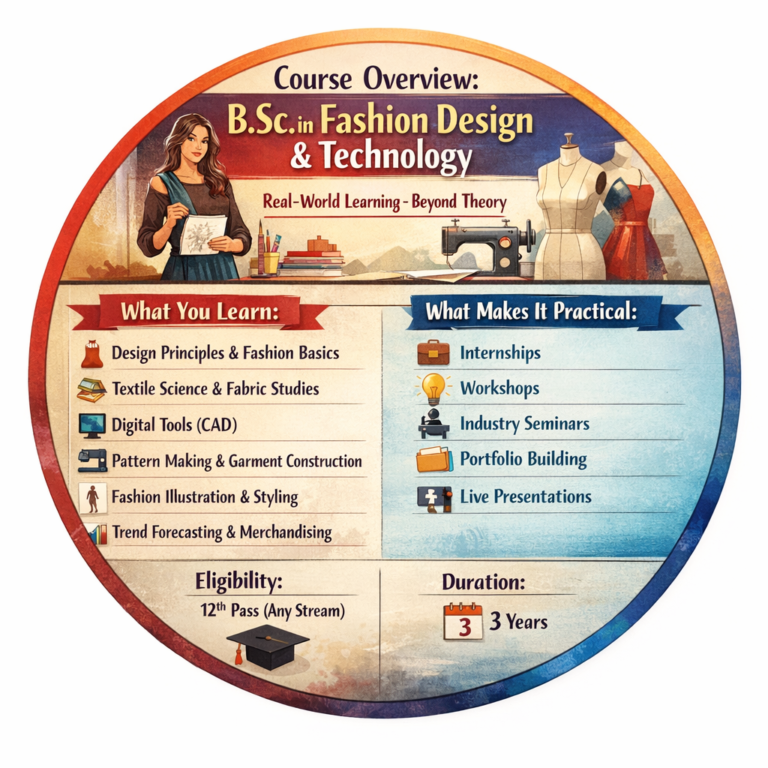
Course Overview: B.Sc. in Fashion Design & Technology
This is not just a theory-heavy course. It’s built around real-world learning.
What You Learn:
- Design principles and fashion basics
- Textile science and fabric studies
- Digital tools (CAD)
- Pattern making and garment construction
- Fashion illustration and styling
- Trend forecasting and merchandising
What Makes It Practical:
- Internships
- Workshops
- Industry seminars
- Portfolio building
- Live presentations
Eligibility:
- 12th pass (any stream)
Duration:
- 3 Years
Semester-Wise Learning Breakdown
Here’s what your learning actually looks like over 3 years:
Year 1 (Foundation)
- Design principles
- Textile basics
- Sewing fundamentals
- Indian costume history
- Surface ornamentation
You start from scratch – no prior experience needed.
Year 2 (Skill Building)
- Fashion illustration
- Pattern making
- Garment construction
- CAD tools
- Fabric studies
- World costume history
This is where things get serious. You start building real skills.
Year 3 (Industry Ready)
- Draping techniques
- Fashion merchandising
- Trend forecasting
- Garment manufacturing
- Portfolio creation
- Fashion entrepreneurship
By the end, you’re not just learning – you’re preparing to enter the industry.
Scope of Fashion Designing in India
Let’s talk about real opportunities.
Fashion is one of the fastest-growing industries – especially in India where:
- Social media is driving trends
- E-commerce is booming
- Personal branding is rising
You’re not limited to just “designer” roles anymore.
Career Options:
- Fashion Designer
- Fashion Stylist
- Fashion Blogger / Influencer
- Fashion Consultant
- Fashion Journalist
- Fashion Illustrator
- Textile Designer
- Fashion Merchandiser
- Garment Technologist
- Fashion Coordinator
- Trend Forecaster
You can work with brands, start your own label, or even go freelance.
Salary in Fashion Designing
Let’s keep it honest – salaries depend on your skills and exposure.
Entry Level:
₹15,000 – ₹30,000/month
Mid Level (2–5 years):
₹40,000 – ₹80,000/month
Experienced Designers:
₹1,00,000+ per month
Freelancers / Own Brand:
No fixed limit – depends on your brand and sales
If you build a strong portfolio and network well, growth can be fast.
Why Practical Exposure Matters More Than Marks
Fashion is not like traditional fields where marks decide everything.
What actually matters:
- Your portfolio
- Your designs
- Your creativity
- Your internships
- Your presentation skills
That’s why courses that focus on practical training, like
B.Sc. in Fashion Design & Technology
stand out — because they prepare you for the real world, not just exams.
Is Fashion Designing a Good Career?
Short answer: Yes – but only if you take it seriously.
This field rewards:
- Consistency
- Creativity
- Hard work
It’s not “easy money.” You’ll need to put in effort, build your identity, and keep evolving.
But if you do it right, it’s one of the few careers where:
- You can express yourself
- Build your own brand
- Earn without limits
Who Should Choose Fashion Designing?
This field is for you if:
- You love creativity
- You notice details in clothing
- You enjoy experimenting with styles
- You want a non-traditional career
It’s not for you if:
- You want a fixed routine job
- You avoid practical work
- You don’t like learning continuously
Final Thoughts
Fashion designing is not just about making clothes – it’s about creating impact.
From concept to creation, every step requires skill, patience, and vision. With the right training, exposure, and mindset, you can turn your creativity into a real career.
And if you’re serious about entering this field, choosing a structured program that combines design + technology + industry exposure can make all the difference.
FAQ
Fashion designing is the process of creating clothes and accessories using creativity, technical skills, and market understanding.
You need to complete 12th grade in any stream. After that, you can pursue a degree like B.Sc. in Fashion Design.
Typically 3–4 years with a degree program, along with internships and practical experience.
It can be. Starting salaries are moderate, but experienced designers and entrepreneurs can earn very high incomes.
Basic drawing helps, but you can improve with practice. Many designers rely on digital tools today.
Design principles, textile science, pattern making, garment construction, CAD, and fashion merchandising.
Very strong. With growing demand in e-commerce, social media, and personal branding, opportunities are increasing rapidly.